
Modular vs. Prefabricated Buildings: What's the Difference?

If you've spent any time researching faster construction methods, you've probably seen the terms modular and prefabricated used interchangeably.
While they're related, they're not the same thing.
Understanding the difference can help owners, developers, architects, and contractors choose the right building solution for their project and avoid common misconceptions.
What Does "Prefabricated" Mean?
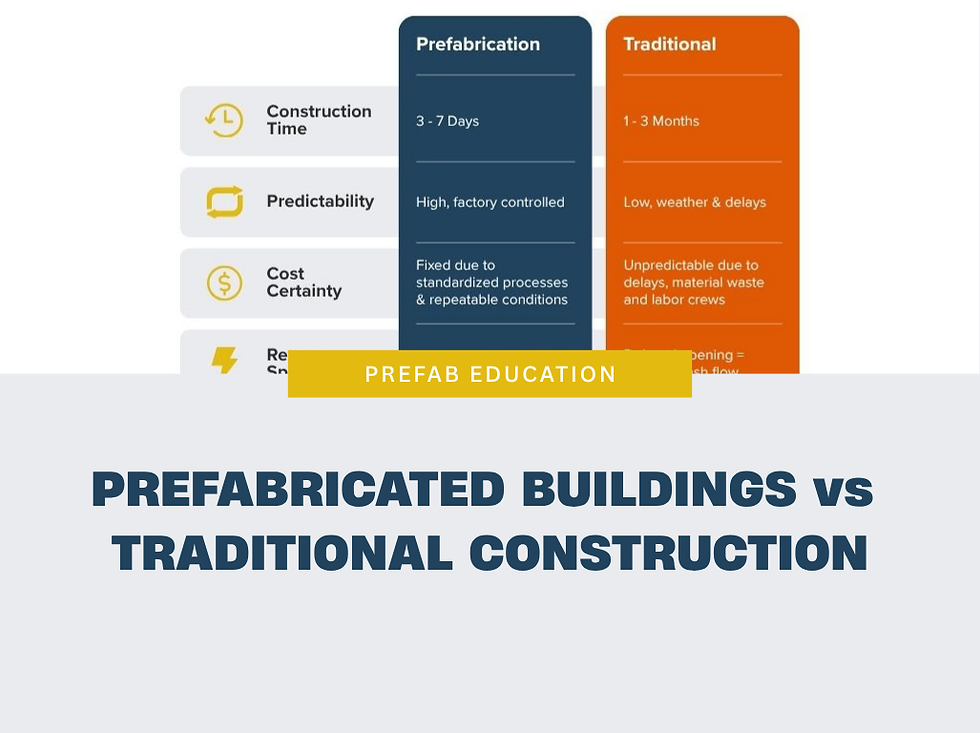
Prefabrication is a speed-to-market method of construction where building components are manufactured in a controlled factory environment before being transported to the job site for installation.
Rather than building everything outdoors, major portions of the project are completed off-site under controlled conditions. This reduces weather delays, improves quality control, and speeds up the construction schedule.
Prefabrication is an umbrella term that includes several construction methods, including:
Panelized construction
Industrialized Construction
Modular construction
Structural components (trusses, wall panels, floor systems)
Preassembled building systems
In other words:
All modular buildings are prefabricated, but not all prefabricated buildings are modular.
What Is Modular Construction?
Modular construction involves building large, fully enclosed sections of a building called modules in a factory.
These modules often include:
Interior walls
Flooring
Electrical
Plumbing
HVAC
Cabinets and finishes
Once completed, they're transported to the site, lifted into place with cranes, and connected together to create the finished building.
Modular construction works especially well for projects with repetitive floor plans, such as:
Hotels
Apartment buildings
Student housing
Healthcare facilities
What Is Panelized Prefabrication?
Panelized prefabrication manufactures the building shell as individual components instead of complete rooms or modules.
These components are built in a factory, shipped flat to the job site, and assembled panel by panel to create the building structure.
A typical panelized building system includes:
Exterior wall panels
Structural framing
Roof trusses
Roof panels
Structural sheathing
Once installed, the building is typically dried in within two weeks, allowing additional trades to begin much sooner than with traditional stick-built construction.
This approach helps accelerate commercial construction by combining the speed of off-site manufacturing with the flexibility of conventional construction.
Modular vs. Prefabricated: Side-by-Side
Feature | Modular Construction | Panelized Prefabrication |
Factory-built | ✓ | ✓ |
Fast on-site installation | ✓ | ✓ |
Interior finishes completed in factory | ✓ | — |
Design customization | Limited | High |
Transportation efficiency | Low | High (flat-packed panels) |
Build time | ~12 months | ~6 weeks |
Which Construction Method Is Right for Commercial Projects?
The answer depends on your project goals.
If your project consists of repetitive layouts with standardized interiors, modular construction can be an excellent solution.
However, many commercial buildings require greater architectural flexibility, unique branding elements, and coordination with local contractors. That's where panelized prefabrication often provides the best balance of speed and customization.
Projects such as:
often benefit from a panelized approach because every location can be customized without sacrificing construction speed.
Why Fullerton Uses Panelized Prefabrication
At Fullerton Building Systems, we manufacture custom prefabricated building shells, not modular buildings.
Each project is engineered specifically for the building's design and then manufactured in our controlled facility before being shipped to the job site. Browse our recent projects to see how prefabrication comes together in the real world.
Our system allows owners and contractors to:
Install most building shells in as little as 3 days
Get the building dried in within 1–2 weeks
Minimize weather-related delays
Improve construction schedule predictability
Allow follow-on trades to begin sooner
Open new locations faster
Rather than delivering finished rooms, we deliver a precision-built structural shell that integrates seamlessly with the rest of the construction process.
The Bottom Line
Both modular and prefabricated construction are designed to improve efficiency over traditional stick-built methods.
The difference lies in how the building is manufactured and assembled.
For commercial projects that demand speed, customization, and schedule predictability, panelized prefabrication delivers the benefits of off-site manufacturing while maintaining the flexibility of conventional construction.
At Fullerton Building Systems, we help commercial project teams reduce construction schedules, achieve earlier dry-in, and move projects from build to business faster with custom prefabricated building systems.
Comments